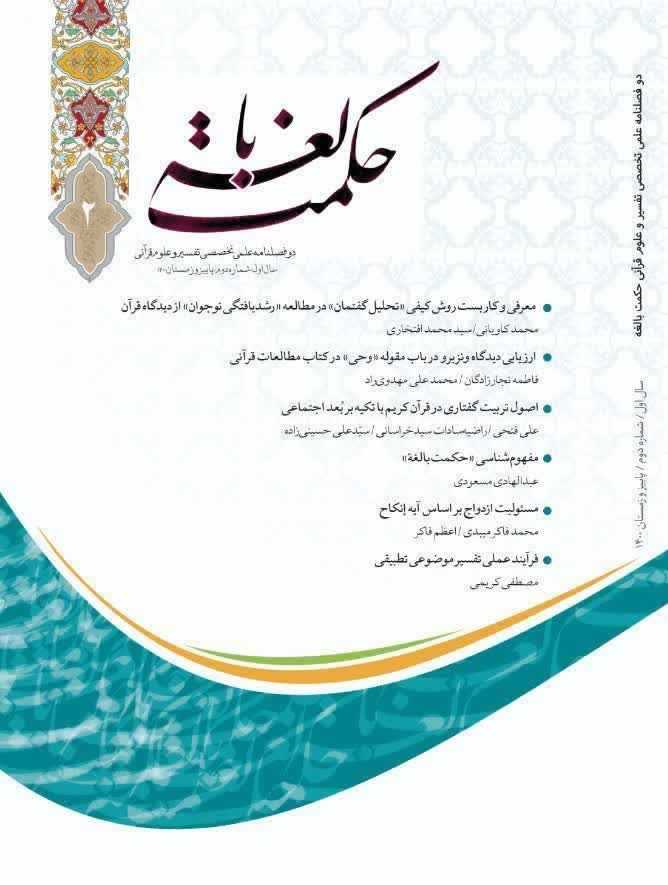
دوفصلنامه علمی قرآن پژوهی «حکمت بالغه»

دوفصلنامه علمی قرآن پژوهی «حکمت بالغه»

تحلیل تطبیقی سازه های معنایی «دوری» در قرآن کریم باتکیه بر معناشناختی شبکه ای

نوع مقاله : مقاله پژوهشی

نویسنده
دانشیار دانشگاه علوم ومعارف قرآن کریم
10.22034/hb.2026.1798.1259
چکیده
این پژوهش با هدف تبیین سازه های معنایی واژگان: «بُعد»، «سَحْق»، «عُمْق»، «قَصْو» و «نَأْی» در حوزه مفهوم «دوری» در قرآن کریم و با روش توصیفی-تحلیلی و در چارچوب معناشناسی شبکه‌ای انجام شده است. یافته‌ها نشان می‌دهد که این واژگان، اگرچه در معنای پایه «فاصله و جدایی» مشترکند، اما شبکه‌ای منسجم و چندبعدی را شکل می‌دهند که در آن هر واژه بار معنایی خاص خود را دارد: «بُعد» به عنوان عام‌ترین واژه، دوری نامحدود و بدون جهت خاص را نشان می‌دهد؛ «سَحْق» بیانگر شدیدترین و بی‌بازگشت‌ترین نوع دوری، همراه با طرد و نفرین است؛ «عُمْق» و «قَصْو» یک تقابل کلیدی را در بُعد عمودی ایجاد می‌کنند به طوری که اولی بر دوری در جهت عمق و پایین و دومی بر دوری در جهت ارتفاع و بلندی دلالت دارد؛ و «نَأْی» با برجسته‌سازی مؤلفه اراده، به کناره‌گیری فعال و اعراض آگاهانه از حق اشاره می‌کند. در نتیجه‌گیری کلی می‌توان گفت قرآن کریم از طریق این شبکه معنایی منسجم، انواع فاصله‌های مادی و معنوی انسان از حق را با ظرافتی بی‌نظیر بازنمایی می‌کند، یافته‌ای که می‌تواند مبنای دقیق‌تری برای ترجمه و تفسیر آیات مربوطه فراهم آورد.
کلیدواژه‌ها
موضوعات

عنوان مقاله English

Comparative Analysis of the Semantic Structures of "Dori" in the Holy Quran Based on Network Semantics

نویسنده English

Rahman oshriyeh
Associate Professor, University of Holy Quran
چکیده English

This study aims to explain the semantic structures of the words: "distance", "sahq", "depth", "qasw" and "nay" in the field of the concept of "distance" in the Holy Quran, using a descriptive-analytical method and within the framework of network semantics. The findings show that these words, although they share the basic meaning of "distance and separation", form a coherent and multidimensional network in which each word has its own specific semantic load: "distance", as the most general word, indicates unlimited distance without a specific direction; "sahq" indicates the most severe and irreversible type of distance, accompanied by rejection and curse; "depth" and "qasw" create a key opposition in the vertical dimension, so that the former indicates distance in the direction of depth and down, and the latter indicates distance in the direction of height and height; And "nay" by highlighting the component of will, refers to active withdrawal and conscious rejection of the truth. In general, it can be said that the Holy Quran, through this coherent semantic network, represents the various material and spiritual distances of man from the truth with unparalleled elegance, a finding that can provide a more accurate basis for the translation and interpretation of the relevant verses.

کلیدواژه‌ها English

Holy Quran
conceptual analysis
distance concepts
network semantics

مقالات آماده انتشار، پذیرفته شده
انتشار آنلاین از 18 بهمن 1404

  • تاریخ دریافت 22 مهر 1404
  • تاریخ بازنگری 08 دی 1404
  • تاریخ پذیرش 18 بهمن 1404